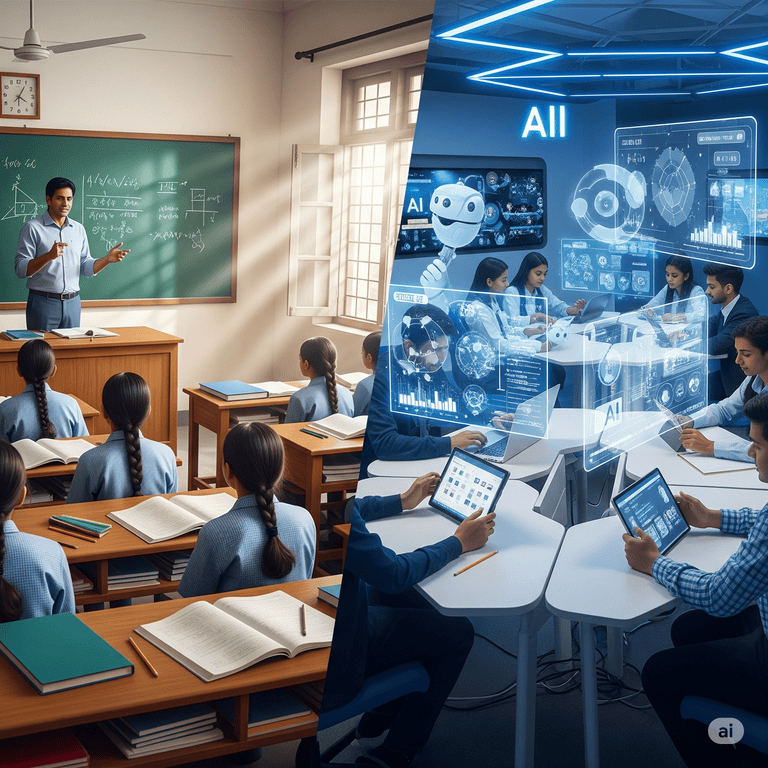
The AI Revolution in Student Life
Picture this: A student struggling with calculus gets instant, personalized tutoring at 2 AM. Another student creates stunning presentations with AI-generated visuals in minutes. A third receives customized study plans that adapt to their learning style in real-time. This isn’t science fiction—it’s the reality of how AI impact on students and education is reshaping learning experiences in 2025.
The AI impact on students extends far beyond simple technology adoption—it’s reshaping how young minds think, learn, and prepare for tomorrow’s challenges.
As we navigate through this digital transformation, students across India and globally are witnessing unprecedented changes in how they learn, create, and prepare for their futures. From Mumbai’s engineering colleges to Delhi’s management institutes, artificial intelligence is becoming an integral part of the educational landscape.
At Kaahe, we understand that embracing technological advancement while maintaining human connection is crucial for holistic student development. Our workshops on creativity and digital culture prepare students to thrive in this AI-enhanced world.
The Current State of AI in Education: Numbers That Matter
The AI impact on students and education isn’t just a buzzword—it’s backed by compelling statistics. Recent research reveals that the global AI in education market is projected to reach $112.3 billion by 2034, with a compound annual growth rate of 36.7%. This explosive growth reflects how deeply artificial intelligence is penetrating educational systems worldwide.
In India, where over 250 million students are enrolled in various educational institutions, AI adoption is accelerating rapidly. From IITs implementing AI-powered course recommendations to state boards exploring automated assessment systems, the transformation is evident everywhere.
Key Statistics Shaping AI in Education:
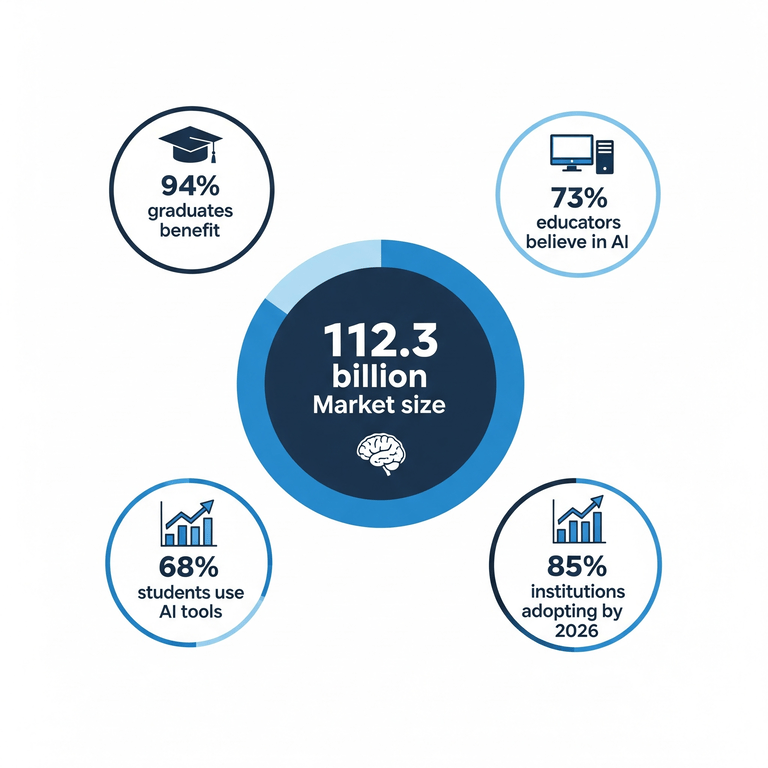
• 94% of graduates report that AI training has enhanced their career prospects • 73% of educators believe AI will significantly improve personalized learning • 68% of students use AI tools for research and assignment completion • 85% of institutions plan to integrate AI solutions by 2026
These numbers underscore the massive shift occurring in educational methodologies. Students who understand and leverage AI tools are positioning themselves for success in an increasingly digital world.
How AI is Transforming Student Learning: 8 Revolutionary Changes
1. Personalized Learning Experiences
The AI impact on students is most evident in personalized learning, where artificial intelligence revolutionizes traditional educational approaches. AI algorithms analyze individual learning patterns, strengths, and weaknesses to create customized educational pathways. Unlike traditional one-size-fits-all approaches, AI tutoring systems adapt to each student’s pace and learning style.
For instance, platforms like Khan Academy’s AI tutor, Khanmigo, provide instant feedback and adjust difficulty levels based on student performance. Indian students preparing for competitive exams like JEE or NEET are particularly benefiting from AI-powered mock tests that identify knowledge gaps and suggest targeted improvements.
2. Intelligent Content Creation and Research
Students today can generate comprehensive research papers, create stunning presentations, and even compose creative writing pieces with AI assistance. Tools like ChatGPT, Claude, and Google Bard are becoming essential companions for academic work.
However, the key lies in using these tools ethically and creatively. Students learn to prompt AI effectively, fact-check generated content, and add their unique perspectives to AI-assisted work.
3. Real-Time Language Translation and Global Learning
AI impact on students and education extends beyond geographical boundaries. Real-time translation tools enable students to access educational content in multiple languages, breaking down linguistic barriers. Indian students can now easily access MIT lectures, Oxford resources, and global research papers without language constraints.
This democratization of education is particularly powerful for students in rural areas who can now access world-class educational content previously unavailable to them.
4. Automated Assessment and Instant Feedback
Traditional assessment methods are being revolutionized by AI. Automated grading systems provide instant feedback on essays, mathematical problems, and even coding assignments. This immediate response helps students identify mistakes quickly and adjust their learning strategies accordingly.
5. Virtual AI Tutors and Teaching Assistants
AI-powered virtual tutors are available 24/7, providing support when human teachers aren’t accessible. These systems can explain complex concepts, provide practice problems, and offer encouragement—all tailored to individual student needs.
6. Predictive Analytics for Academic Success
AI systems analyze student data to predict potential academic challenges before they become serious problems. This early intervention approach helps educators and students proactively address learning difficulties.
7. Enhanced Creative Expression
In alignment with Kaahe’s focus on creativity, AI tools are empowering students to express themselves in new ways. From AI-generated art and music composition to creative writing assistance, students are discovering new forms of artistic expression.
Our creativity workshops at Kaahe integrate AI tools while maintaining focus on human creativity and emotional expression.
8. Career Guidance and Skill Development
AI-powered career counseling tools analyze student interests, skills, and market trends to suggest optimal career paths and skill development opportunities. This guidance is particularly valuable in India’s rapidly evolving job market.
Benefits of AI for Students: Advantages That Matter
The AI impact on students and education brings numerous advantages that extend far beyond traditional learning boundaries:
Academic Benefits:
Understanding the AI impact on students reveals multiple layers of educational transformation:
• Improved Learning Efficiency: AI personalizes content delivery, reducing study time while increasing retention • Enhanced Research Capabilities: Students can process vast amounts of information quickly and accurately • Better Writing Skills: AI writing assistants help students improve grammar, structure, and clarity • Advanced Problem-Solving: AI tools help break down complex problems into manageable steps
Personal Development Benefits:
• Increased Confidence: Instant feedback and personalized support boost student self-esteem • Better Time Management: AI scheduling and task management tools improve productivity • Enhanced Creativity: AI brainstorming tools unlock new creative possibilities • Global Perspective: Access to international content broadens worldview
Career Preparation Benefits:
• Future-Ready Skills: Early AI exposure prepares students for AI-integrated workplaces • Digital Literacy: Students develop essential tech skills demanded by employers • Adaptability: Working with AI systems develops flexibility and learning agility • Innovation Mindset: AI tools encourage experimental and innovative thinking
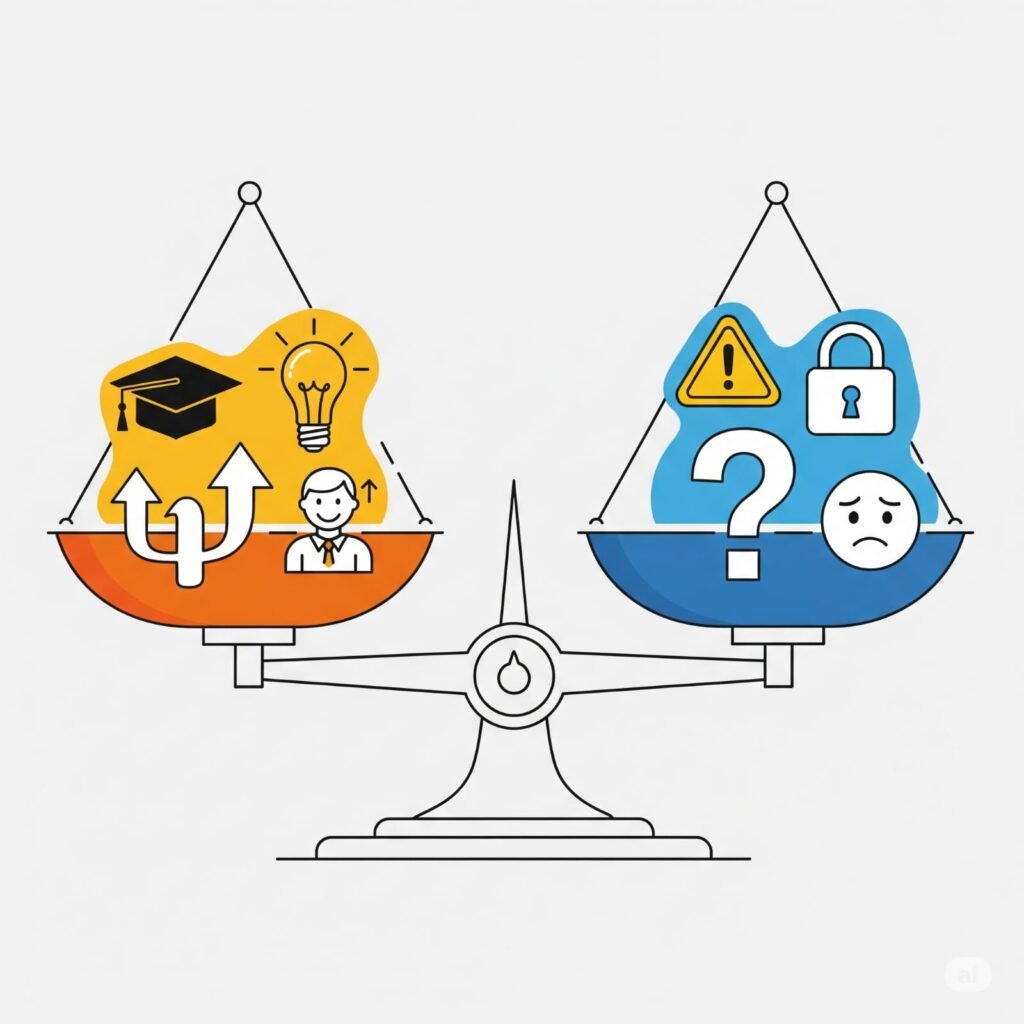
Challenges and Concerns: Navigating the AI Landscape Responsibly
While the AI impact on students offers tremendous benefits across educational landscapes, it also presents challenges that require careful consideration:
Academic Integrity Concerns
The ease of AI-generated content raises questions about originality and academic honesty. Students must learn to use AI as a tool for enhancement rather than replacement of their own thinking.
Best Practices for Ethical AI Use: • Always cite AI assistance in academic work • Use AI for brainstorming and editing, not wholesale content creation • Develop critical thinking skills to evaluate AI-generated information • Understand institutional policies regarding AI use
Digital Divide and Accessibility
Not all students have equal access to AI tools and high-speed internet. This digital divide could exacerbate existing educational inequalities, particularly affecting students from economically disadvantaged backgrounds.
Privacy and Data Security
AI systems collect vast amounts of student data, raising concerns about privacy and data security. Educational institutions must implement robust data protection measures and transparent privacy policies.
Over-Dependence Risk
There’s a risk that students might become overly dependent on AI tools, potentially weakening their independent thinking and problem-solving skills.
Quality Control and Misinformation
AI systems can sometimes generate incorrect or biased information. Students need to develop skills to verify AI-generated content and cross-reference sources.
At Kaahe, our digital wellness workshops address these challenges, teaching students to use technology mindfully and responsibly.
Popular AI Tools for Students in 2025
Understanding the AI impact on students and education requires familiarity with the tools shaping this transformation:
Academic Research and Writing:
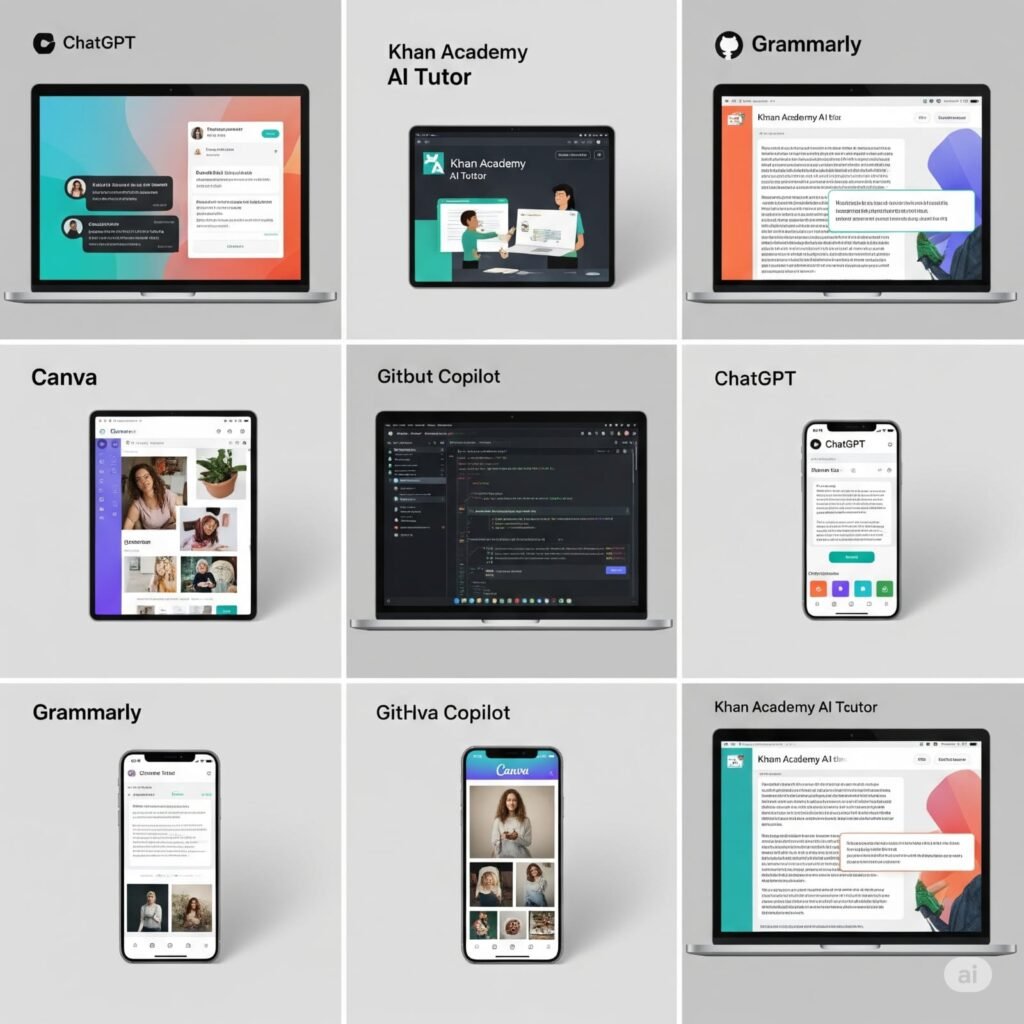
• ChatGPT: Comprehensive AI assistant for research, writing, and problem-solving • Claude: Advanced AI for complex analysis and ethical reasoning • Grammarly: AI-powered writing enhancement and grammar checking • Quillbot: Paraphrasing and citation assistance
Learning and Tutoring:
• Khan Academy’s Khanmigo: Personalized AI tutor for various subjects • Socratic by Google: AI homework helper using camera-based problem recognition • Photomath: AI-powered mathematics problem solver • Duolingo: AI-enhanced language learning platform
Creative and Design:
• Canva Magic Design: AI-powered design tool for presentations and projects • DALL-E 2: AI image generation for creative projects • RunwayML: AI video editing and creation platform • Notion AI: AI-integrated note-taking and organization system
Programming and Technical Skills:
• GitHub Copilot: AI programming assistant • Replit Ghostwriter: AI code completion and debugging • Codecademy’s AI Assistant: Personalized coding help and guidance
Study Organization:
• Otter.ai: AI transcription for lectures and meetings • Forest: AI-powered focus and productivity app • Anki: AI-enhanced spaced repetition for memorization
These tools represent just a fraction of the AI ecosystem supporting student success. The key is learning to select and use the right tools for specific learning objectives.
The Future of AI in Education: What’s Next?
The AI impact on students continues evolving rapidly, with transformative developments emerging monthly. As we look toward the future, several exciting developments are on the horizon:
Emerging Trends for 2025-2030:
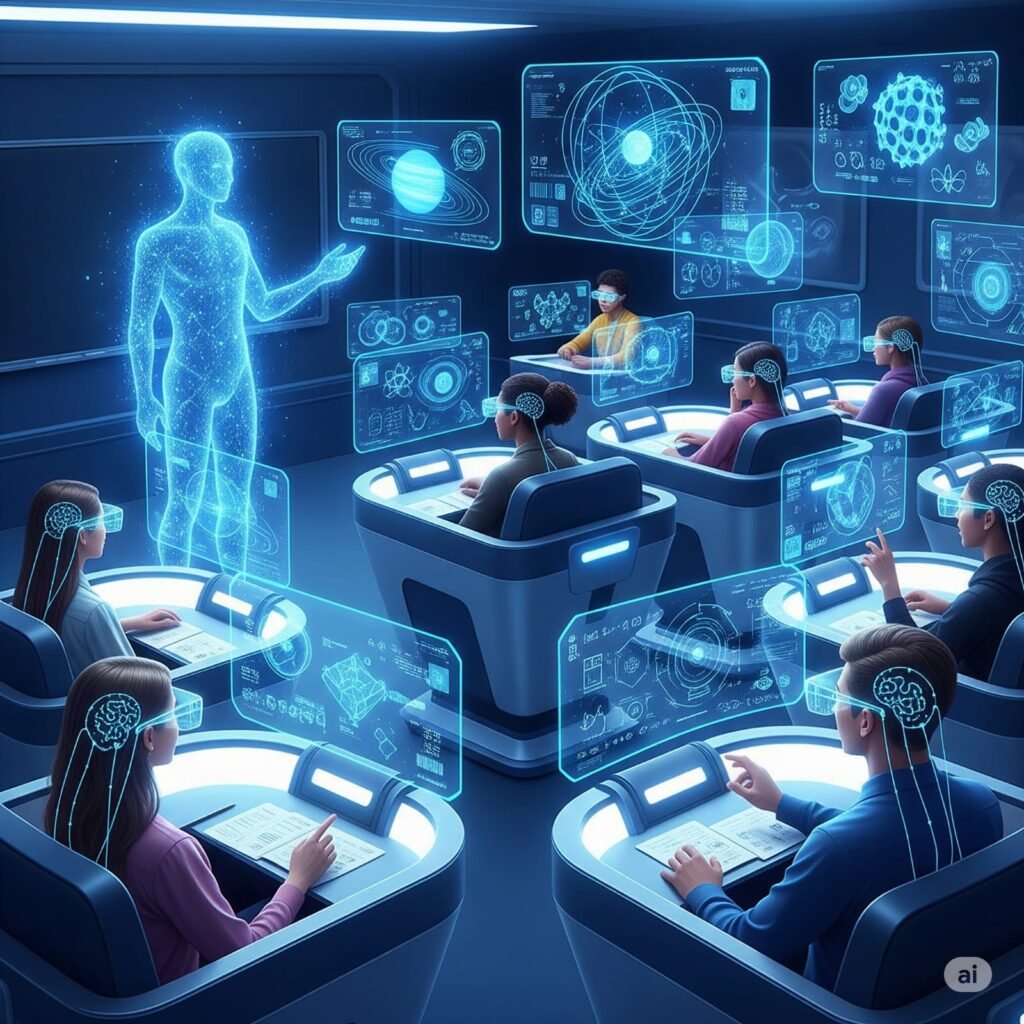
Immersive Learning Experiences: Virtual and augmented reality combined with AI will create realistic simulations for subjects like history, science, and medicine. Students will be able to walk through ancient Rome, manipulate molecular structures, or perform virtual surgeries.
Emotional Intelligence AI: Future AI systems will recognize and respond to student emotions, providing empathetic support and adjusting teaching methods based on emotional states.
Brain-Computer Interfaces: While still experimental, brain-computer interfaces may eventually allow direct information transfer, revolutionizing how students acquire knowledge.
AI-Generated Curricula: Educational institutions will use AI to design curricula that adapt in real-time based on industry demands, student interests, and learning outcomes.
Preparing for the AI Future:
Students today must develop both technical AI literacy and uniquely human skills that complement artificial intelligence:
Technical Skills to Develop: • Prompt engineering and AI interaction • Data analysis and interpretation • Basic programming and algorithm understanding • Digital ethics and responsible AI use
Human Skills to Strengthen: • Critical thinking and skepticism • Emotional intelligence and empathy • Creative problem-solving • Leadership and collaboration • Ethical reasoning and moral judgment
At Kaahe, our comprehensive workshops prepare students for this AI-integrated future while emphasizing the irreplaceable value of human skills like emotional intelligence and creative expression.
Practical Tips for Students: Maximizing AI Benefits
To harness the full AI impact on students and education, consider these actionable strategies:
Getting Started with AI Tools:
1. Start Small and Specific Begin with one AI tool that addresses your immediate needs. Don’t try to master everything at once.
2. Learn Effective Prompting The quality of AI responses depends heavily on how you phrase your questions. Practice creating clear, specific prompts.
3. Verify and Cross-Reference Always fact-check AI-generated information using multiple reliable sources.
4. Maintain Academic Integrity Be transparent about AI assistance and follow your institution’s guidelines.
Daily AI Integration Strategies:
Morning Study Planning: Use AI to create personalized study schedules based on your workload and energy levels.
Research Enhancement: Let AI help brainstorm research topics and identify relevant sources, but conduct the actual analysis yourself.
Writing Support: Use AI for grammar checking and structural suggestions, not for generating entire assignments.
Problem-Solving Practice: Work through AI-generated practice problems to reinforce learning.
Creative Projects: Collaborate with AI for brainstorming and inspiration while maintaining your unique voice.
Building AI Literacy:
• Take online courses about AI fundamentals • Join student AI communities and forums • Experiment with different AI tools regularly • Stay updated on AI developments and ethical discussions • Practice explaining AI concepts to others
The Role of Educators and Institutions
The AI impact on students and education requires thoughtful adaptation from educational institutions and educators:
Institutional Responsibilities:
Policy Development: Schools and colleges must create clear AI usage policies that balance innovation with academic integrity.
Infrastructure Investment: Institutions need to invest in AI-capable technology and training for both students and faculty.
Curriculum Updates: Traditional curricula must evolve to include AI literacy and ethics alongside subject-specific content.
Teacher Training: Educators require professional development to effectively integrate AI tools into their teaching methods.
Educator Adaptation:
Teachers are shifting from information providers to learning facilitators, helping students navigate AI tools effectively and develop critical thinking skills. This transformation aligns with Kaahe’s mentor-based approach, where experienced professionals guide students through practical skill development.
Our mentors at Kaahe understand that the future belongs to students who can seamlessly blend AI capabilities with human insight, creativity, and emotional intelligence.
Global Perspectives: AI in Education Worldwide
The AI impact on students and education varies significantly across different countries and cultures:
International AI Education Initiatives:
United States: Leading in AI research and development, with universities like Stanford and MIT pioneering AI education programs.
China: Massive investments in AI education infrastructure, with AI curriculum introduced from primary school levels.
Singapore: Comprehensive AI literacy programs integrated across all educational levels.
India: Rapidly growing AI adoption in education, with government initiatives promoting digital learning and AI skills development.
European Union: Strong focus on ethical AI development and regulation in educational settings.
Lessons for Indian Students:
Indian students can learn from global best practices while leveraging the country’s strong mathematical and technical education foundation. The emphasis should be on developing both AI technical skills and the cultural intelligence that gives Indian professionals a global advantage.
This global perspective is integrated into Kaahe’s approach to preparing students for international opportunities and cross-cultural collaboration.
Measuring Success: AI Impact Assessment
Understanding the true AI impact on students and education requires systematic measurement:
Key Performance Indicators:
Academic Metrics: • Improved test scores and grades • Faster problem-solving times • Enhanced research quality • Better writing clarity and structure
Skill Development Metrics: • Increased digital literacy scores • Enhanced creative output • Improved critical thinking assessments • Better collaboration and communication skills
Engagement Metrics: • Higher course completion rates • Increased study time efficiency • Greater participation in learning activities • Enhanced motivation and confidence levels
Career Readiness Metrics: • Better performance in internships and placements • Increased employer satisfaction with graduates • Higher salary packages and career advancement • Enhanced adaptability in workplace technology
Long-term Impact Assessment:
The true measure of AI’s educational impact will be visible in how well students adapt to future challenges, contribute to innovation, and maintain their humanity while leveraging technology.
Addressing Common Concerns: FAQ Insights
Will AI Replace Human Teachers?
The AI impact on students and education is more about augmentation than replacement. AI enhances teaching capabilities but cannot replace the emotional intelligence, creativity, and moral guidance that human educators provide. The future classroom will feature AI-human collaboration, not AI dominance.
How Can Students Avoid AI Dependency?
Balance is key. Students should use AI as a tool to enhance their capabilities, not replace their thinking. Regular “AI-free” practice sessions help maintain independent problem-solving skills.
What About Students Who Can’t Access AI Tools?
Educational equity remains a crucial concern. Institutions and governments must work together to ensure AI benefits reach all students, regardless of economic background.
How Can Parents Support AI Integration?
Parents can encourage responsible AI use, stay informed about AI developments, and help children understand both the benefits and limitations of artificial intelligence.
Embracing the AI-Enhanced Future
The AI impact on students represents the most significant educational transformation in human history. in human learning history. We stand at the threshold of an era where personalized, accessible, and powerful educational tools are available to every student with an internet connection.
However, success in this AI-enhanced world requires more than just technical proficiency. Students need to develop a balanced approach that leverages AI’s capabilities while maintaining their uniquely human qualities—creativity, empathy, ethical reasoning, and emotional intelligence.
At Kaahe, we believe the future belongs to students who can seamlessly integrate AI tools with human skills. Our workshops on communication, creativity, and emotional intelligence prepare students for this balanced approach to learning and growth.
The AI revolution in education isn’t just about technology—it’s about empowering students to become more creative, more insightful, and more capable of solving complex problems. By embracing AI responsibly while nurturing human connections and skills, students can unlock their full potential in an increasingly digital world.
Ready to Explore AI-Enhanced Learning?
The journey into AI-enhanced education starts with curiosity and guided exploration. Whether you’re a student looking to improve your academic performance, a professional seeking to upgrade your skills, or an educator wanting to integrate AI into your teaching methods, the key is to start with the right foundation.
Take the Next Step with Kaahe:
Discover how our expert-led workshops can help you navigate the intersection of technology and human development. From digital wellness to creative expression, from communication skills to emotional intelligence, Kaahe provides the holistic education approach that prepares students for an AI-integrated future.
Explore Kaahe’s workshops and join thousands of students who are already embracing the future of learning. Because in the age of AI, the most successful students are those who master both technology and humanity.