
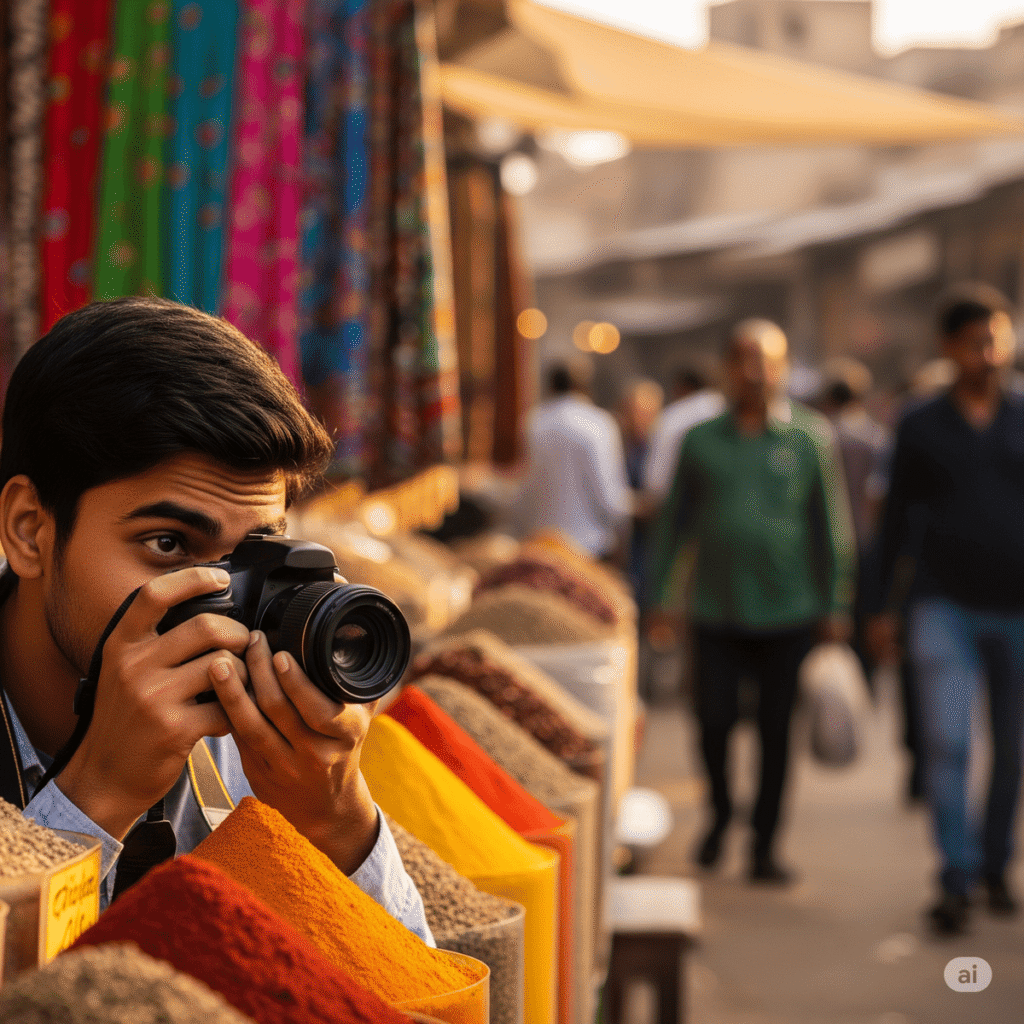
Learning about the top photography mistakes to avoid is the fastest way for any aspiring photographer in India to improve their skills. You might have a great camera and a passion for capturing the world, but if your images consistently fall flat, it’s likely you’re making a few common errors. This guide is designed to be your definitive resource, helping you identify and fix the key issues holding you back. We will dive deep into the specific photography mistakes to avoid that can make the difference between a forgettable snapshot and a powerful photograph. Understanding these pitfalls is the first step toward developing a truly creative eye.
Many budding photographers believe that expensive gear is the secret to great images, but the truth is far simpler. It’s about knowledge and practice. By understanding the most critical photography mistakes to avoid, you can elevate your work dramatically, regardless of the camera you use. This article will not only list these errors but also provide actionable solutions, drawing on the expertise of mentors at Kaahe who guide students through this exact journey. We will cover composition, lighting, focus, and other fundamentals, ensuring you have a clear roadmap. Recognizing these photography mistakes to avoid is essential for your growth.
Mistake #1: Ignoring Composition: One of the Biggest Photography Mistakes to Avoid
One of the most frequent photography mistakes to avoid is neglecting the principles of composition. Composition is the art of arranging elements within your frame to create a visually appealing and impactful image. Many beginners simply point their camera at their subject and shoot, resulting in photos that feel unbalanced, cluttered, and lack a clear focal point.
Why this is a problem: Without strong composition, the viewer’s eye doesn’t know where to look. The story or emotion you wanted to convey gets lost in the visual noise. This is one of those fundamental photography mistakes to avoid because it undermines everything else you do. A technically perfect photo with poor composition will always feel weaker than a slightly imperfect photo with a compelling arrangement of elements. Learning to spot these photography mistakes to avoid in your own work is a game-changer.
How to Fix It: Learn the Rules (So You Can Break Them)
The solution is to actively learn and practice foundational composition techniques. A mentor can guide you, but you can start right now.
- Embrace the Rule of Thirds: This is a classic for a reason. Imagine your frame is divided by two horizontal and two vertical lines. Place your key subject along these lines or at their intersections. This simple shift away from the center creates immediate visual interest. This is a simple way to correct one of the most common photography mistakes to avoid.
- Use Leading Lines: Train your eye to see lines in the environment—roads, fences, rivers, architectural details. Use these lines to guide the viewer’s eye through the image toward your main subject. This adds depth and a sense of journey to your photos.
- Look for Natural Frames: Use elements in the foreground, like a doorway, a window, or tree branches, to create a frame around your subject. This adds context and a professional, layered look to your images. Avoiding a flat perspective is key, and ignoring framing is one of the photography mistakes to avoid.
At Kaahe, mentors like Virendra Singh Adhikari (@vinee.studio) emphasize that mastering these rules is the first step. In his workshops, he doesn’t just explain the theory; he leads practical photo walks where students learn to see these compositional opportunities in the real world, helping them sidestep these crucial photography mistakes to avoid.
Mistake #2: Not Understanding Light: A Critical Photography Mistake to Avoid
Photography is, quite literally, “drawing with light.” Therefore, one of the most critical photography mistakes to avoid is not understanding or respecting light. Many beginners shoot at any time of day, often in harsh midday sun, or rely on their camera’s pop-up flash, which creates flat, unflattering images with harsh shadows.
Why this is a problem: Light dictates the mood, dimension, and texture of your photograph. Bad light can make a beautiful subject look boring, while good light can turn a mundane scene into something magical. Ignoring light is one of the most impactful photography mistakes to avoid.
How to Fix It: Become an Observer of Light
The fix is to shift your mindset from being a “taker” of photos to an “observer” of light.
- Chase the Golden Hour: The hour after sunrise and before sunset provides soft, warm, directional light that is flattering for portraits and creates beautiful, long shadows in landscapes. Make it a mission to shoot during this time.
- Appreciate Soft Light: Don’t put your camera away on an overcast day. The clouds act as a giant diffuser, creating soft, even light that is perfect for portraits and capturing fine details without harsh shadows.
- Learn to See Direction: Pay attention to where the light is coming from. Is it front-lighting your subject, backlighting them to create a silhouette, or side-lighting them to reveal texture? Understanding direction gives you creative control. This is a core concept taught by Kaahe mentors to help students overcome basic photography mistakes to avoid.
Mistake #3: A Lack of a Clear Subject or Focus

Another one of the top photography mistakes to avoid is creating images where the subject is unclear. The viewer looks at the photo and asks, “What am I supposed to be looking at?” This often happens when the frame is too busy or the photographer hasn’t made a clear decision about what the story of the image is.
Why this is a problem: A photo without a clear subject lacks impact and purpose. It fails to communicate a message or emotion effectively. To create powerful images, you must learn to avoid this ambiguity. These are photography mistakes to avoid if you want your work to resonate with people.
How to Fix It: Simplify and Get Closer
The solution is to be decisive and simplify your frame.
- Identify Your “Why”: Before you press the shutter, ask yourself: “What is the one thing that made me want to take this photo?” Make that “one thing” the hero of your image.
- Get Closer: Often, the best way to make your subject clear is to physically move closer or use your lens to zoom in, eliminating distracting elements from the background.
- Use Depth of Field: Learn to use a wide aperture (a low f-stop number like f/1.8) to create a shallow depth of field. This keeps your subject sharp while blurring the background, making your subject pop. This technical skill helps you overcome one of the most common photography mistakes to avoid.
Mistake #4: Having a Shaky Camera or Missed Focus
A blurry photo due to camera shake or missed focus is one of the most frustrating photography mistakes to avoid. No matter how good your composition or lighting is, if the image isn’t sharp where it needs to be, it’s often unusable.
Why this is a problem: A lack of sharpness is a technical flaw that immediately signals an amateur photo. It distracts the viewer and undermines the credibility of the image.
How to Fix It: Stabilize and Master Your Focus Points
- Check Your Shutter Speed: A common rule of thumb is to use a shutter speed that is at least the reciprocal of your lens’s focal length (e.g., for a 200mm lens, use a shutter speed of 1/200s or faster). In low light, increase your ISO or use a tripod. For a deeper dive, Digital Photography School offers an excellent guide on shutter speed.
- Proper Stance: Hold your camera correctly. Keep your elbows tucked into your body to create a stable base.
- Master Your Autofocus (AF) Points: Don’t let your camera decide where to focus. Learn how to select a single AF point and place it directly on your subject’s eye (for portraits) or the most important part of the scene. This is a vital skill for avoiding these photography mistakes to avoid. A Kaahe mentor can provide hands-on training to master this quickly.
Mistake #5: Not Telling a Story
Finally, one of the most profound photography mistakes to avoid is creating technically sound but emotionally empty images. A photo can be perfectly lit, composed, and focused, but if it doesn’t tell a story or evoke an emotion, it won’t connect with the viewer.
Why this is a problem: Storytelling is what elevates photography from a craft to an art form. Photos that tell stories are memorable and engaging.
How to Fix It: Think Like a Storyteller
This is where a mentor’s guidance becomes invaluable. At Kaahe, Virendra Singh Adhikari, drawing from his filmmaking background, teaches students to think about the narrative.
- Capture Emotion: Focus on capturing moments of genuine emotion—joy, contemplation, surprise.
- Include Context: Use the environment to add layers to your story. What does the background say about your subject?
- Think in Series: Sometimes one photo isn’t enough. Think about creating a series of 3-5 images that tell a more complete story. This is an advanced technique that helps you move past individual photography mistakes to avoid.
Conclusion: Your Path to Improvement
Improving your photography is a journey of continuous learning. By focusing on these 5 photography mistakes to avoid, you have a clear and actionable path forward. It’s not about buying a new camera; it’s about investing in your skills and your vision, which is a core benefit we explore in our Photography for Students: A Creative Guide. Start by practicing your composition, becoming an observer of light, defining your subject, stabilizing your camera, and always thinking about the story. Each of these steps will help you overcome the most common photography mistakes to avoid.
If you’re ready to accelerate your learning with expert guidance, explore the Photography & Storytelling workshops at Kaahe. A mentor can provide the personalized feedback and hands-on experience needed to truly transform your work.