
In today’s fast-paced, screen-dominated world, students are constantly looking for meaningful ways to express themselves. Photography is not just about clicking pictures—it’s about seeing the world differently, expressing inner creativity, and building focus. Whether it’s using a smartphone or a professional camera, photography for students opens up a new path of learning, observation, and emotional growth.
In this guide, we’ll explore what photography means, why it matters, the powerful benefits it offers students, the different types of photography they can try, and how to get started—without needing expensive gear.

What Is Photography for Students?
At its core, photography for students is a creative medium that allows them to tell visual stories, explore ideas, and communicate emotions. It sharpens observational skills and teaches patience and timing.
Photography teaches students:
- To observe beauty in the everyday
- To express feelings visually
- To capture moments with meaning
- To develop an eye for detail and light
And most importantly, it helps them discover themselves.
Why Photography for Students Matters
Photography goes beyond being a hobby—it builds valuable life skills. Here’s why photography is an important creative outlet for students:
1. Enhances Creativity
- Students learn how to frame the world from different perspectives
- Encourages experimentation with angles, lighting, and composition
2. Boosts Focus and Mindfulness
- Photography requires attention to detail
- Students become more present and observant in their daily lives
3. Improves Visual Communication
- Photography teaches the power of non-verbal storytelling
- Great for students who may not express themselves easily through words
4. Strengthens Emotional Intelligence
- Helps students recognize and capture emotional expressions
- Builds empathy and observational awareness
5. Builds Patience and Discipline
- Great photos take time, light, and careful planning
- Students learn the value of effort and timing
6. Creates Career Awareness
- Photography for students can lead to interests in media, design, journalism, and digital content creation
Types of Photography for Students to Explore
Students don’t need professional equipment to get started. A smartphone and curiosity are enough. Here are key styles of photography for students to try:
1. Portrait Photography
- Capturing people’s faces and expressions
- Great for learning emotion, lighting, and storytelling
2. Candid Photography
- Unplanned, real-life moments
- Helps students observe life and be ready at the right moment
3. Nature & Landscape Photography
- Clicking images of nature, skies, sunsets, parks, and more
- Encourages outdoor activity and appreciation of the environment
4. Macro Photography
- Close-up photography of tiny subjects like insects, plants, and textures
- Teaches patience and attention to detail
5. Still Life Photography
- Photographing objects arranged in a creative setting
- Builds skills in composition, color, and lighting
6. Lifestyle Photography
- Capturing daily life, routines, or student activities
- A great journalistic and memory-making style
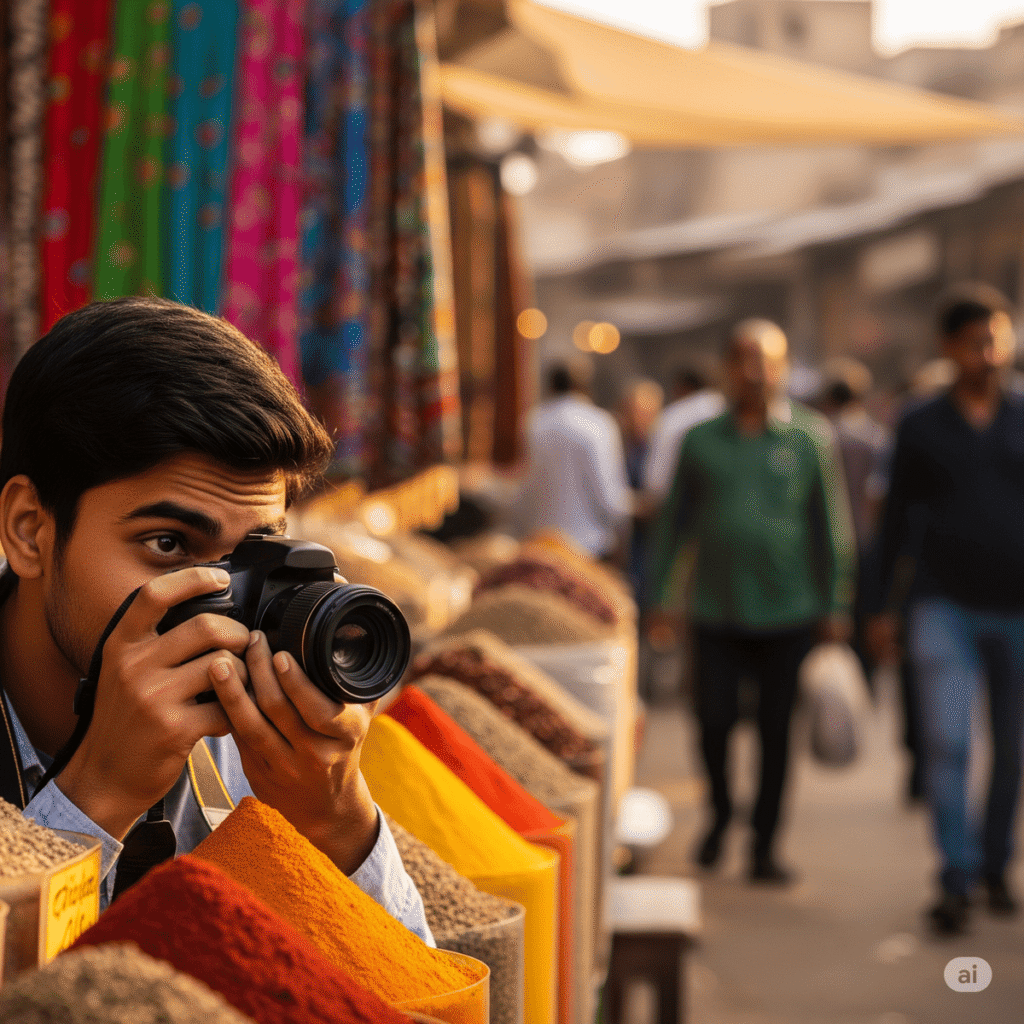
7. Street Photography
- Observing people in public places with respect and curiosity
- Builds courage, quick thinking, and storytelling
How to Start Practicing Photography for Students
Getting started with photography for students doesn’t require fancy tools. Here’s how to begin:
a. Use What You Have
- A smartphone with a decent camera
- Free editing apps like Snapseed, Lightroom, or Canva
b. Start Small and Daily
- Click one meaningful photo a day
- Join a photo challenge (like 30 days, 30 themes)
c. Observe, Don’t Rush
- Spend time looking at shadows, faces, buildings, objects
- Ask: What story do I want to tell?
d. Learn from Free Resources
- YouTube channels, Instagram pages, and apps offer tutorials
- Follow student photographers or visual artists online
Insights from Mentor Virendra Singh Adhikari

At Kaahe, mentor Virendra Singh Adhikari often says that photography trains the eye and the mind.
“When students start observing, framing, and reflecting through photography, they’re also learning how to observe themselves. That’s where confidence grows.”
He encourages every student to start with their smartphone, focus on emotion rather than perfection, and explore stories hidden in ordinary scenes.
His photography sessions often focus on:
- Street and candid photography
- Telling stories through light
- Expressing emotions through angles
What Students Learn Through Photography
When students consistently practice photography, they develop:
- Better concentration
- Visual literacy
- Confidence in presenting their work
- Ability to take feedback
- An appreciation for light, color, and composition
These skills support academic subjects like:
- Art
- Science (observation)
- Communication (expression)
- Digital literacy
Photography and Mental Health for Students
Photography offers calm in chaos. Here’s how it benefits students emotionally:
- Reduces screen fatigue by shifting focus to the real world
- Creates a calm, creative zone in the day
- Builds self-worth when sharing good work
- Encourages solo and mindful time outdoors
Read our blog on 7 Powerful Benefits of Digital Storytelling in Education
Photography as a Student Habit
Want to make photography a part of your routine? Try this:
- 10-minute photo walks every morning or evening
- Create a weekly theme (like color, emotion, movement)
- Keep a digital portfolio (Google Drive, Canva, or Instagram)
Add photography as your personal growth habit—just like reading or journaling.
Real-World Opportunities for Students Interested in Photography
Students can explore:
- Photography clubs at school or college
- Online competitions for teens
- Building a beginner portfolio
- Interning with photographers or content creators
National Geographic Kids Photography Competitions
7 Transformative Ways Theatre for Self Discovery Builds Teenage Confidence)
A Creative Lens to See the World
Photography for students is more than a skill—it’s a mindset. It trains young minds to observe, feel, and express. Whether students use it to build a career, tell a story, or calm their thoughts, photography can become a powerful personal practice.
In a world that’s always rushing, this is one habit that slows students down—and opens their eyes.
Start small. Click with intent. See where it takes you.
Helpful Tools
Free Tools:
- Snapseed (Android/iOS)
- Adobe Lightroom Mobile
- Canva for photo collages
Learning Resources:
Kedarq Blog: Explore Visual Skills That Shape Careers7 Powerful Benefits of Digital Storytelling in Education

Pingback: 5 Photography Mistakes to Avoid (And How to Fix Them)